

In modern homes and architecture, quartz slabs are becoming an essential material for their look and performance.
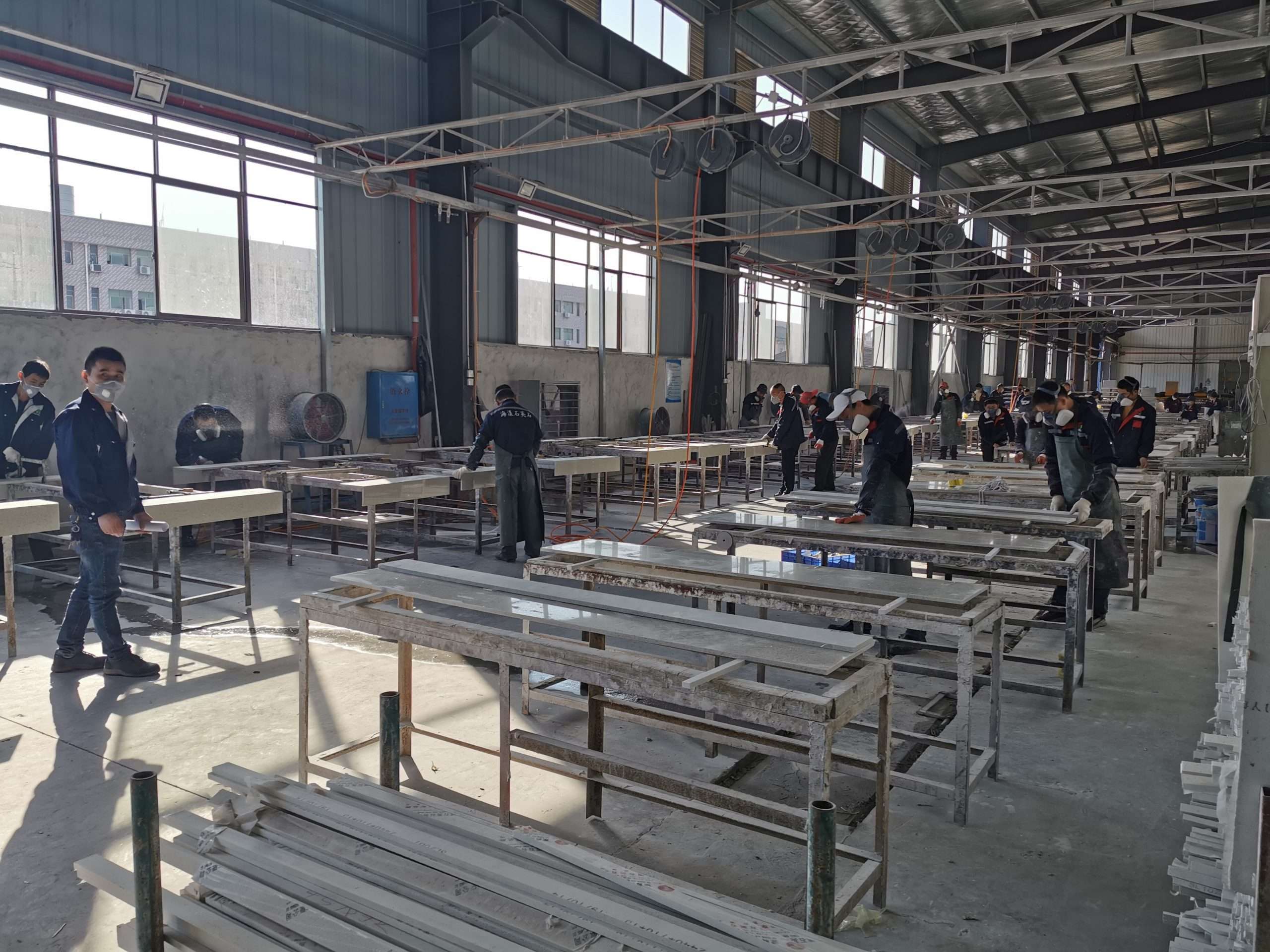
One of the main uses of quartz is kitchen countertops. Fabrication is tightly controlled—from order intake and drawing review to bridge-saw cutting, cut-outs, polishing and bonding. Color, quantity and size must be checked; the saw bed must be level, cutting speed moderate, and cooling water sufficient. Non-linear cuts use a waterjet. Front and back splashes are pre-cut into strips and joined at 45 degrees before bonding.
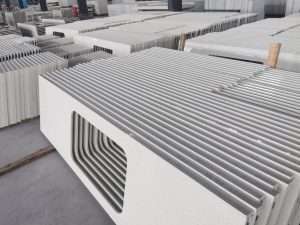
Bonding matters. Keep joints clean, apply adhesive evenly and clamp until fully cured. Protect the polished face and do not rest it on a bare steel bench. Dry-fit and correct dimensions before the final bond.
The path from ore to kitchen, dining and bar tops tests quality at every step: stripping, sorting, washing, crushing, acid wash, dewatering, drying, color and magnetic separation, weighing, mixing and distribution, pressing, curing, ageing, calibration, polishing and cutting… these fine steps create the slab’s performance.
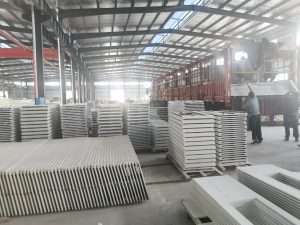
As applications grow, demand for quartz sand used in slabs is rising year by year, opening more room for the material’s future.
The journey from ore to a versatile surface shows what materials science and engineering can do. As technology and markets evolve, quartz will reach still more applications.